


U.S. Seeks New Avenues For Tariffs With Investigations Into 16 Major Trading Partners
Mar 13, 2026
U.S. Seeks New Avenues for Tariffs with Investigations into 16 Major Trading Partners
After the Supreme Court struck down key parts of President Donald Trump's tariff policies last month, the United States has launched new investigations into 16 of its major trading partners.
On Wednesday, U.S. Trade Representative Jamieson Greer stated that the investigations into unfair trade practices under Section 301 of the Trade Act could lead to new tariffs being imposed before this summer on countries including China, the European Union, India, Japan, South Korea, and Mexico.
This investigation could enable the U.S. to impose import duties on goods from any country found to be engaging in unfair trade practices. The trade probe will examine what the U.S. government calls "overcapacity" in foreign manufacturing sectors, which it says has led to overproduction and massive, persistent trade deficits between the U.S. and these countries.
Greer indicated that he hopes to conclude the investigations before the new temporary tariffs, implemented by Trump at the end of February, expire in July.
"The United States will no longer sacrifice its own industrial base for the sake of other countries that might export their overcapacity and production issues to us," Greer said in a statement.
Other countries under investigation include Vietnam, Thailand, Malaysia, Cambodia, Singapore, Indonesia, Bangladesh, Switzerland, and Norway.
Canada, the second-largest U.S. trading partner, was not targeted in the investigation. Greer said he had informed the relevant countries and noted that the announcement should not come as a surprise. However, the move is likely to further anger U.S. trading partners. Previously, foreign governments spent months negotiating and making concessions with the Trump administration to lower tariffs, many of which were ultimately overturned by the Supreme Court.
Weeks earlier, the Supreme Court ruled that the tariffs Trump imposed on countries around the world last April were illegal.
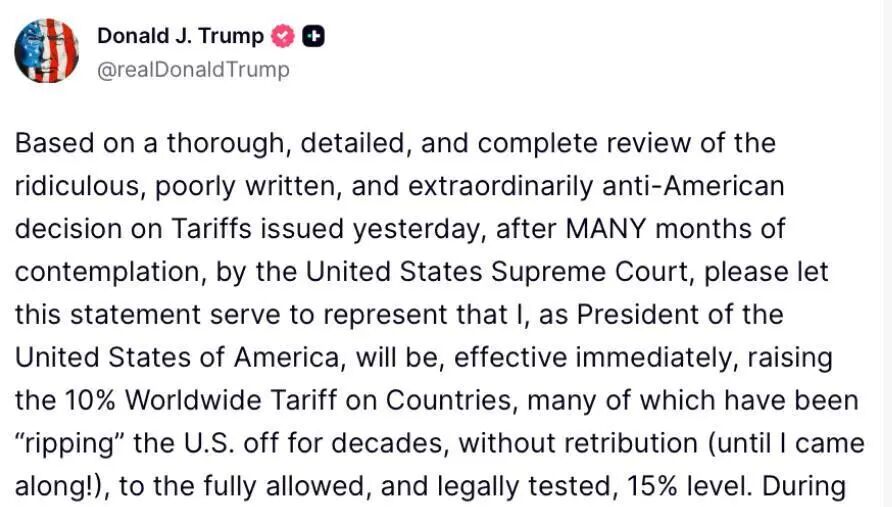
Shortly after the ruling was announced, the president declared a new 10% tariff on global goods, calling the decision "terrible" and blasting the judges who struck down his trade policies as "fools."
The next day, he stated the rate would be 15%, but the actual rate imposed when it took effect was 10%.
Since then, Trump and other senior officials in his administration have indicated that the rate will be raised to 15%.
This investigation provides the Trump administration with a mechanism to reestablish a credible threat of imposing tariffs on trading partners.
Meanwhile, senior U.S. officials are set to meet with their Chinese counterparts in Paris this weekend.


