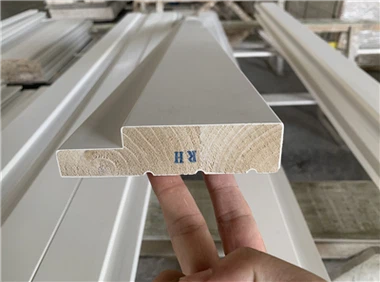
How to Install Baseboards?
Nov 20, 2024

Installing baseboards is an easy DIY project, but staying safe is important. Always wear safety glasses and earplugs when using power tools like saws or nail guns. Keep your work area clean and free of debris while using tools. Lastly, read each power tool's manual to ensure you know all the safety rules.
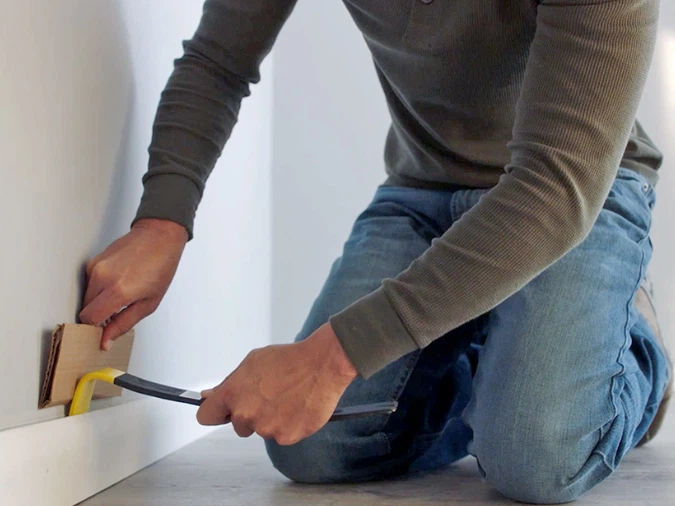
- Cut away the old paint and caulk from the top edge of the trim.
- Use a pry bar to pull the old trim off.
- Remove any nails left on the wall.
- Scrape and sand off any leftover glue or caulk.

Preparations:
- Measure the room's perimeter, rounding to the nearest foot divisible by two, and measure each wall twice.
- Add extra length for outside corners and a few extra inches for mistakes.
- Purchase extra baseboard moulding for errors.
Baseboard components:
- Cap moulding: Optional, decorative, used with wainscot or chair rails.
- Baseboards: Main part, 3 1/2 to 6 inches high.
- Shoe moulding: Optional, for a finished look, especially with new flooring.
- Head to the store with accurate measurements; moulding comes in lengths up to 94 1/2 inches.
Tools needed:
- Miter saw (or miter box if on a budget).
- Brad nailer.
- Caulk gun, cartridges, and wood glue.
- Move the baseboards into the room a few days before installation to allow the material to acclimate to the environment.
- Measure and cut the baseboards for each wall. Cut the baseboards a few inches longer for outside corners to make the miter cuts.
- Paint the baseboards and let them dry.
- Use a stud finder to locate and mark the wall studs.


- Use a 4-foot level to check if your floor is level.
- If the floor isn't level, find the lowest point in the room and attach a scrap piece of baseboard to the wall. Use the top edge of the scrap baseboard as a reference, making horizontal marks every few inches around the room, keeping the marks level.
- Snap a chalk line between the marks to show where the top edge of the baseboards should be when installed.
- Start at an inside corner. Hold the first board against the wall, level it, and temporarily tack it in place.
- If installing baseboards before carpeting, position them 1 inch above floor level to allow room for the carpet and pad.
- If adding baseboards after carpeting, install them at the same height as if there were no carpet. If not using a quarter round or shoe moulding, the baseboard should sit directly on the carpet.
For uneven floors, you'll need to scribe the bottom of the baseboard for a precise fit.
- To scribe, set a compass to 1/4 inch apart. Place the compass point on the floor against the wall, and the pencil above the baseboard. Move the compass along the floor, marking a line across the baseboard's bottom.
- Remove the board and place it on a cutting surface. Set the circular saw to the board's depth, with a 5-degree bevel, and trim along the pencil line.
- Sand the bevel to create a level cut.
- Dry-fit the baseboard to ensure it aligns with the chalk line on the wall.

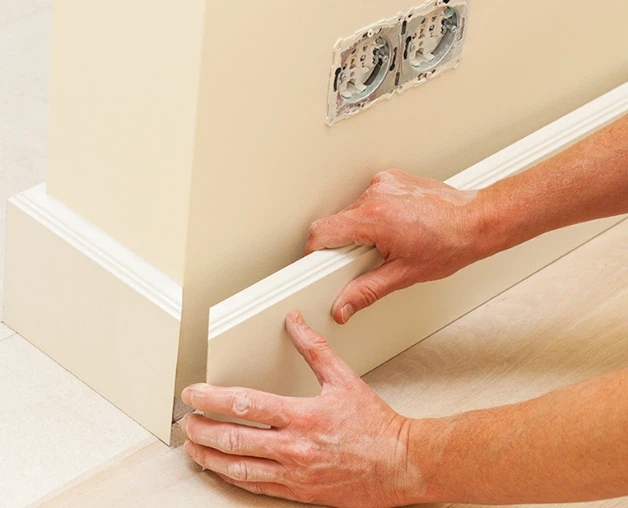
- Fit one end of the baseboard against the inside corner of the wall or door casing.
- At the other end, draw a vertical line along the back of the board using the outside edge of the baseboard as a guide.
- Mark the top of the board to indicate the miter direction.
- Place the adjacent board against the next wall and mark it the same way. Its miter angle should be opposite of the first board.
- Set a compound miter saw to 45 degrees and cut each miter slightly longer (about 1/16 inch) to ensure a tight fit.
- Place both boards against the wall and check the join.
- If the join is too tight, use a sanding block to remove excess wood.
- Once the fit is correct, apply a thin bead of wood glue to the mitered edges and secure the boards with finishing nails.
When two walls meet at an inside corner, one baseboard should be coped to fit into the other for a seamless look. While you can use a miter cut, this results in a less smooth finish and requires additional work.
- Measure and cut one baseboard to fit flush against the wall, making a straight cut next to the corner. Mark the end to be coped, leaving a couple of extra inches for mistakes.
- Use a miter saw to bevel cut the end at a 45-degree angle, exposing the baseboard's profile.
- With a coping saw, carefully cut along the profile, angling the blade to cut away from the back of the baseboard.
- Sand the edges smooth and dry-fit the pieces.
- If the fit is correct, secure the baseboard with finishing nails.


- When two baseboards meet on a long wall or straight run, you'll need to create a scarf joint.
- Miter the ends of the two baseboards at 45 degrees in opposite directions.
- Apply glue to the miters and overlap them.
- Nail through the piece that covers the joint and into the stud to secure the joint.
- If the baseboard doesn't need to continue around any corners or obstacles, simply cut it and butt it up against the object (such as door trim).
-
In older homes, walls may not be square, requiring angle adjustments for proper baseboard installation.
-
Use a sliding T bevel to measure and determine the new angles for the corners. Alternatively, use scrap material for trial-and-error fitting until you find the right angle.
-
If the joint gaps are small, or the gap between the wall and baseboard is minimal, you can fill them with caulk or wood putty.
-
For larger gaps (greater than 1/4 inch), you will need to adjust the angles of the outside and inside corners to match the angle of the wall's corners.


- Install shoe or cap moulding, using the same methods for outside and inside corners, scarf, and butt joints.
- Caulk along the top edge, corner edges, and nail holes.
- Touch up the baseboard with primer paint.
- Apply the final top coat of paint for a smooth finish.