what is quarter round primed
Jul 12, 2020
If you want the look of natural wood, you have a clear decision: solid wood skirting. If hardwood is oak or pine, which is easily available in hardware stores, you will be able to see the difference. You save between $50 and $75 by buying unfinished, trimmed pieces from your local large box. However, if you want to avoid paying a high price for the right cladding but still want a clean, finished look, you should consider buying a prefabricated shelf that matches it and dye it yourself.
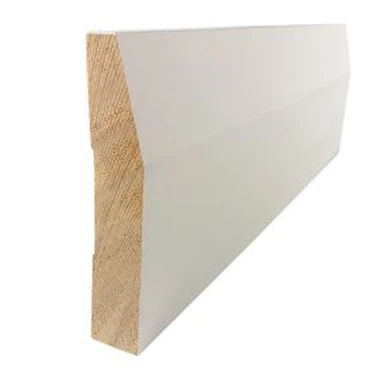
If the cost is a problem, you should choose MDF baseboards because they offer a cost advantage and can be installed in larger numbers. If you install a wet application, choose a base shape that is primed in the quarter round 3 1 / 4 ''. For example, I have laid cork floors in my laundry room, and in many places.
The shoe shaping is about the same as the quarter-round primed, with the same 90 degree angle on the back, but instead of being in a perfect quarter radius, its profile is a bit more compact. Now I wish I had used higher forms because that was the rest of the house. Instead of a quarter round I used a 3 1 / 4 '' shape with a 1 1 / 2 '' radius.
The main application of the shoe moulding tool is the Bebe function for the interface between baseboard and floor and for the interior of a wall or wallpaper.
Although quarter-round shapes can be placed on the bottom of the skirting board, carpenters and homeowners tend to prefer shoe shapes that are a smaller, flexible piece of molding than their curved counterparts. Because shoe shapes are so small and flexible, they can snake up and down the floor, concealing bumps with much less work than just the skirting boards. The use of shoe shapes gives floor installers more flexibility in their work and also allows them to hide uneven floors.
R ranges from 1 / 2 inches to 3 / 4 inches in diameter and ranges from 2 / 3 inches to 1.5 inches in width, according to the US Army Corps of Engineers.
The problem is that most types of flooring require a little space around the edges to expand and shrink. Make sure that the different type of skirting matches the size and shape of your floor, as well as the width and height of the floor.
Even if you do not leave a vertical gap, the wood can warp as it expands while the pieces press against each other. If you leave the basic shape in place and lay a new floor, you cannot leave a gap between the existing basic shape and the quarter-round. Once the bottom part is covered with the new floor (and even more is now covered with a quarter - round), your basic shape will have shrunk.
In the next tutorial I will show you how to cut and install new quarters - round trim to replace the old ones.
If you are having a hard time figuring out how to switch from the door panel to the skirting board, uneven door frames can be difficult to trim. Here are some tips to give you the illusion of a square, and then look at it as soon as it is in place.
Typically, the cladding and floor are unattractive and make it easy for dirt and dirt to form at the base of the cladding.
We remove the existing shoe foot, stain it and install a new foot for the shoe, or you can remove it yourself. This gives the SVB the option of either removing it or colouring it and installing it itself, which soils the new base shoe.
To hide the gap between the floor and walls, the quarter circle should be milled to hide it, and it is usually 1 / 4 to 1 / 2 inch.
A plywood board laid on a pair of sawdust works well for this, but you need a firm, flat surface on which to work. A table saw tears a length of the baseboard from the top to lay the edges, and it is important to secure the wood that is milled with a clamp. They require at least 1 1 / 2 inches of wood to form the rounded edges and must be worked on solid, flat surfaces.