Impact Of Tariffs: Sharp Decline in China-U.S. Cargo Volumes, But Shipping Industry Sees Only Deferred Or Shifted Demand
Apr 27, 2025
Impact of Tariffs: Sharp Decline in China-U.S. Cargo Volumes, But Shipping Industry Sees Only Deferred or Shifted Demand

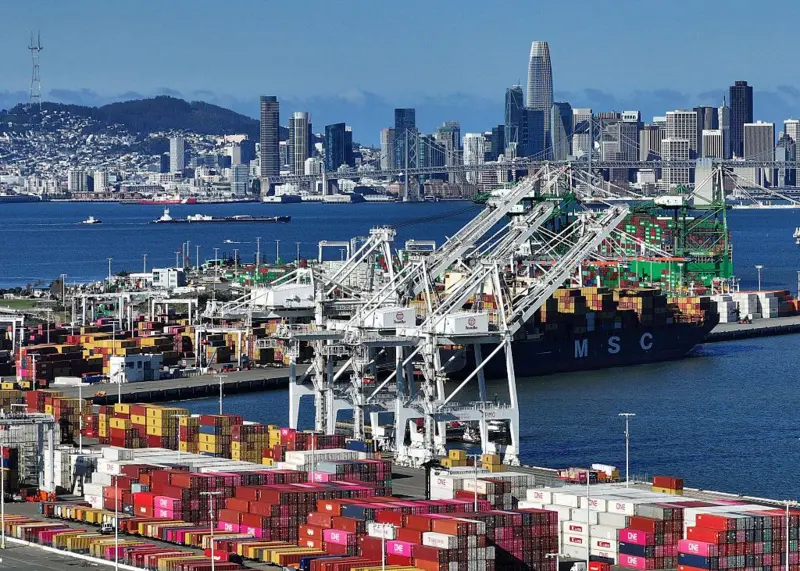
Since President Trump imposed steep reciprocal tariffs and new U.S. port fees, the sea and air freight markets have been significantly impacted. Shipping industry insiders note that while cargo volumes between China and the U.S. have sharply declined, some shipments have shifted to Southeast Asia and other regions, boosting activity on Asia routes. Industry leaders emphasize that the overall volume has not disappeared but has merely been deferred, cautioning against excessive pessimism.
In early April, President Trump's announcement of high reciprocal tariffs sent shockwaves through the market. Although a 90-day suspension temporarily postponed their full implementation, U.S.-China trade relations remain tense. Industry observers are closely monitoring negotiations between the two sides as the prospect of additional tariffs looms. As a result, shipping volumes between China and the U.S. have dropped significantly, with a strong atmosphere of caution and hesitation in the market.
The Shanghai Containerized Freight Index (SCFI) has declined for two consecutive weeks. Freight forwarders report that cargo volumes from China to the U.S. have fallen by approximately 40%, with many shippers adopting a wait-and-see approach, delaying shipments until the policy landscape becomes clearer.
Evergreen Marine stated that, due to tariff impacts, available space on vessels dropped by 30–40% in April, while China's overall import and export volumes decreased by 60–70%. Although there has been some diversion of orders to Southeast Asia, the shift has not met initial expectations. However, General Manager Wu Kuang-Hui remains optimistic, believing that the downturn in Transpacific trade volumes in Q2 reflects deferred shipping schedules rather than a disappearance of demand. "As long as the cargo still exists, there's no reason to be overly pessimistic," Wu said.
Wu also noted that the trade dependency between China and the U.S. remains high and that maintaining such high tariffs long-term would be difficult. He sees the tariffs more as a pressure tactic. Although the shipping industry has low supply elasticity, carriers can adjust through blank sailings and route optimization to enhance vessel utilization and control costs in response to market changes.
According to Lee Yong-Chuan, Vice President of Dimerco Express' ocean freight division, shipping services from China to North America have been significantly reduced. However, intra-Asia routes have seen increased volume, resulting in a stronger-than-usual low season in Q1, with expectations for continued strength in Q2. European routes have faced port congestion issues due to weather and port inefficiencies, but stability in volume and rates is anticipated by mid-May, with potential rate increases afterward.
In air freight, Dimerco Express' air freight president Chiu Chun-Jung stated that the demand for China-U.S. air shipments has also plummeted due to tariffs. Major Chinese carriers such as Air China, China Eastern, and China Southern have drastically reduced cargo flight services. Some e-commerce platforms have even announced suspension of shipments to the U.S. starting in May, with freight forwarders expecting U.S.-bound air cargo volumes to halve. However, Chiu emphasized that volumes are not vanishing but being redirected to other markets.
Chinese e-commerce companies, a major force in the air cargo market, have shifted their focus to Europe, Oceania, and various Asian markets, boosting cargo volumes and rates across Asian hub airports. In 2024, global air cargo capacity increased by 7.4%, while demand rose by 11.3%, creating a supply-demand imbalance. Taiwan's air export volume grew 23.4% year-on-year in Q1, imports rose 32.5%, and total cargo volume was up by 9.4%. "If it weren't for the disruption caused by tariffs, this year's air freight market outlook would have been very strong," Chiu admitted.
In addition, the U.S. Trade Representative (USTR) announced a plan to impose high port fees on vessels owned and operated by Chinese entities, while ships built in China but operated by non-Chinese companies would face lower charges. Dimerco Express believes some shipping lines will adjust their routes accordingly, but thanks to alliance-based fleet coordination, the overall impact should be limited. Industry insiders see this policy as providing justification for potential rate hikes.
Evergreen noted that its China-built vessels are currently deployed mainly on European and intra-Asia routes, with no China-built ships operating on U.S. lanes. Even factoring in Chinese-built vessels on order over the next three years, they will still account for less than 20% of Evergreen's fleet, providing flexibility to adapt to the new regulations.
Industry analysts suggest that Chinese shipping companies and operators using China-built vessels will face higher operating costs, likely leading to increased freight rates, supply chain disruptions, and shifts in global vessel demand. In the short term, shippers may bear higher costs, causing freight rate volatility; in the long term, shipbuilding demand could shift away from China toward countries such as Japan, South Korea, and Taiwan.